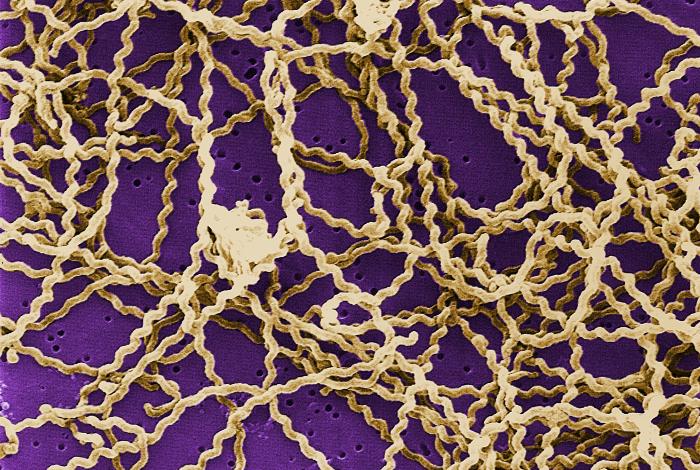
Leptospirosis
Leptospirosis is a notifiable disease, with three cases reported to the duty room in 2011. Of these three cases,
two are believed to have been acquired in Northern Ireland.
Leptospirosis is relatively rare in the UK, with around 50–60 cases reported each year. It is important to identify
and treat cases, and leptospirosis should be considered a differential diagnosis in patients with
abrupt onset of fever who have a history of contact with animal-urine-contaminated water or
animals known to carry leptospirosis.

Leptospirosis is caused by spiral shaped bacteria of the genus
Leptospira
. The
bacteria infect a variety of wild and domestic animals, often asymptomatically,
and are excreted in their urine. Common sources of infection in the UK include
rats and cattle. Person-to-person spread is rare. Infection occurs when infected
animal urine or secretions come into contact with broken skin or mucosal
membranes, directly or via water, soil or vegetation. The risk is therefore higher
in farmers, vets and people taking part in water sports.
Infection may cause a range of illnesses, from asymptomatic or mild, flu-like illness to
severe disease with hepatic and renal failure (known as Weil’s disease). Symptoms
include fever, headache, chills, muscle aches, vomiting, jaundice, red eyes, abdominal
pain, diarrhoea and rash. The incubation period is usually 7–13 days. There are
often two phases to the disease: an initial bacteraemic phase from which there may be
complete recovery, followed by an immune phase, during which there may be complications
such as hepatic and renal failure, meningism, vasculitic manifestations and clotting abnormalities.
Diagnosis is based on clinical suspicion and can be confirmed by laboratory testing. Treatment involves
antibiotic therapy, which should be given early in the course of the disease. Patients usually make a complete
recovery; however, leptospirosis can be fatal, usually as a result of renal failure.
The public health role includes advising on prevention and responding to potential or confirmed cases of
leptospirosis. Prevention strategies include control of the rodent population, immunisation and treatment of
infected animals, and the avoidance of swimming or wading in potentially contaminated water. Education
and advice for those at risk due to their occupation or leisure activities is also important. There is no vaccine
available for humans in the UK, but pre-exposure prophylaxis can be considered in those known to be at high
risk for limited periods.
When a potential or confirmed case is reported, the initial public health action is to gather information about
the patient, risk factors and possible exposures. Exclusion is not recommended; however, others with similar
exposure who may be at risk should be identified to enable the provision of education and advice. Screening of
contacts and pets may be indicated in some situations.
The HPA recommends the following advice to reduce the risk of leptospirosis in those who are in contact with
fresh, surface water – eg canals, ponds or rivers – or with rats.
- Cover cuts, scratches or sores with a waterproof plaster and thoroughly clean cuts or abrasions received
during activities.
- Wear appropriate protective clothing, gloves or footwear.
- Wash or shower promptly after water sports, especially if immersed.
- Avoid capsize drills or rolling in stagnant or slow moving water.
- Wear thick gloves when handling rats.
- Wash hands after handling any animal, and before eating.
Useful resources
HPA website:
National Travel Health Network and Centre:
Leptospira Reference Unit:
Judith Ewing FY2 Public Health